Creators Conversation
Kamala Sankaram
Composer
Minita Gandhi
Librettist
What drew you to the story of The Many Deaths of Laila Starr, and what made you want to bring it to the opera stage?
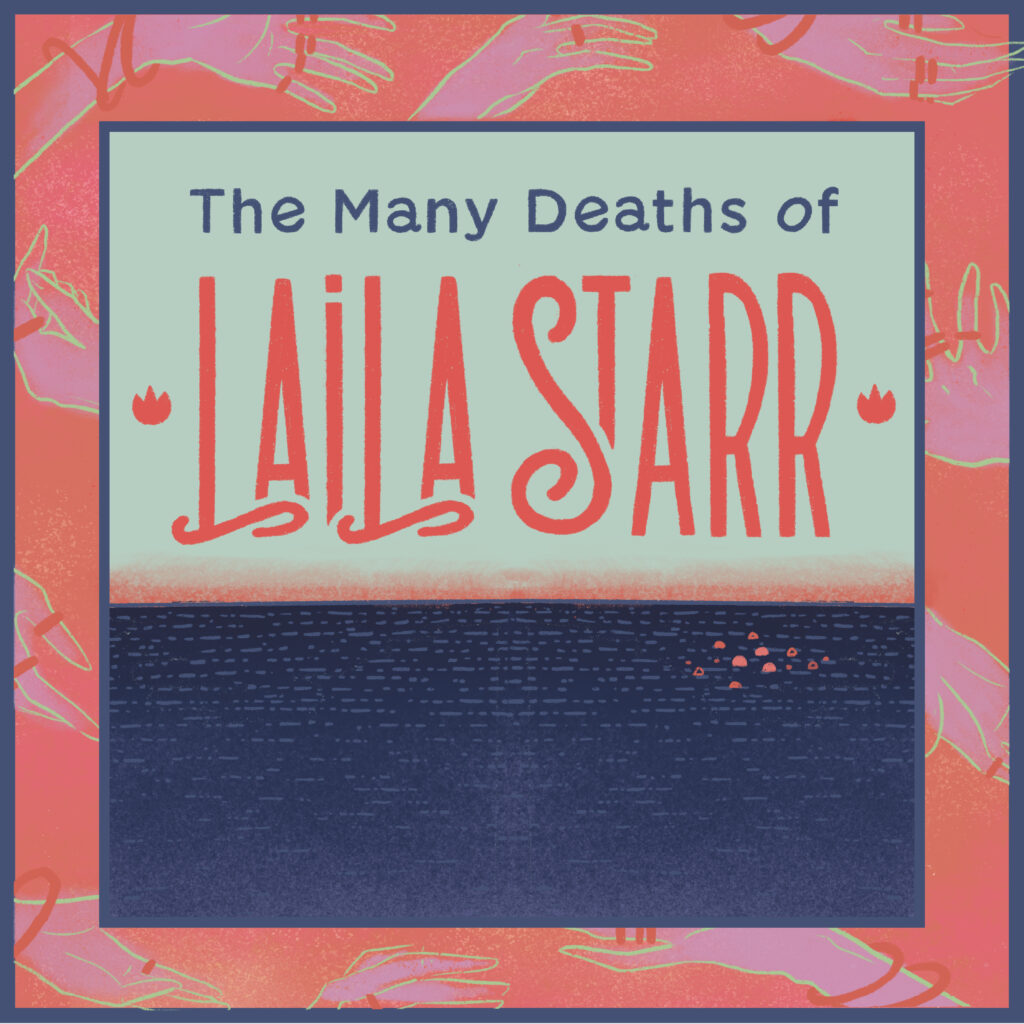
KS: I have a very personal connection to this story. My sister Sheela died of an aggressive cancer in the fall of 2019. A few months later, the world shut down during the COVID pandemic. Coming out of the pandemic, one of my first trips was to visit my sister Uma in Portland. We visited a comic bookstore she likes and that’s where I first encountered Ram V’s work. I was drawn to the beautiful cover of the book and the fact that it was written by a South Asian author. But the book itself is what made me think of an adaptation– it so beautifully captured the grief and experience of mortality that I was feeling, emotions that we had also collectively experienced as a culture. And you know a piece of art has moved you if it inspires you to create something in turn.
MG: I was drawn to the creative exploration of the relationship between mortals and Gods. Who is in service to whom and how? I also wanted to bring us back to Kali’s origin story. She was created out of love for humanity and represents the cycle of life and death. It’s easy to forget that death is not an ending but also a beginning. I wanted to call that in. The deep exploration of grief, mourning, and mortality through a lens of dark comedy struck me. And I love playing with magic realism and metaphor. Also, the setting is one of my birthplace, and I loved the idea of playing within the vibrant bustle of modern India.
The opera explores death, purpose, and what it means to be human. What questions about life and mortality were you most interested in exploring through Laila’s journey?
KS: For me, this story is about the importance of connection: that we live on when someone remembers our name and keeps our memories. We are in a very divisive and isolating moment. I hope that the ability to experience this story collectively, sharing space in the theater with the performers and other audience members is a reminder that we are all connected.
MG: Some of the questions I live in through this opera are: How do we live on (is it in memories, stories, the elements, or something as simple as when someone says our name)? What is the meaning of life? What is life without death? What makes both death and life beautiful? What do we need to let go of to live fully?
What surprised you most about the process of creating this opera together, and how did your perspectives shape one another along the way?
KS: Minita’s personal connection to the story, being from Walkeshwar, knowing the feeling of contemporary Mumbai, was very grounding for me. I am also grateful that she was able to preserve the important elements of Hindu mythology in the libretto.
MG: What surprised me were the moments and themes we aligned on from the beginning. Ocean is a character played by the chorus. That’s something very different than what exists in the original source material. But, when I pitched that idea to Kamala, she was immediately drawn to the ocean being source, and also containing a sea of tormented souls. I love humor and it was lovely to discover how we could combine the narrative storytelling with the musical storytelling to achieve moments of levity. I think it’s so important that not everything be precious. It allows for the deeper moments to land more fully. I also loved Kamala’s instinct to have the world of the Gods and the world of the mortals be distinct from a sonic perspective. It was fun to lean into the idea that the Gods can’t sing because they are not as free as the mortals. We came up with a rhythmic spoken word system that the Gods play in. And that led to a delightful moment of the Gods sounding like a pharmaceutical ad, as they reveal the side-effects of being mortal to
What does it mean to create an opera that brings together Indian musical traditions, contemporary music, and the canonical operatic tradition?
KS: I started working in opera because I was interested in musical storytelling, particularly the ability to put stories onstage that center people and perspectives that aren’t historically present. To put something onstage, particularly in an art form as immense as an opera, is to say, “we see you and we are with you.” As a child growing up in the United States, I didn’t see myself on these stages, so that is something I have sought to address in my work. For this piece, it was important to include Indian elements because India has its own rich tradition of classical music with as long a history as that from Europe. I hope that bringing these forms together can open a new perspective and understanding for people coming from both traditions.
MG: It creates a musical world that perfectly matches the world we have created. It creates an opera that is very much representative of the world we live in today. It creates an opera that is unlike any opera you have heard before. It creates an opera that lives at the intersection of the identities of its creators and serves the storytelling in a highly specific way which creates a universality for those who experience it.
What do you think a production like The Many Deaths of Laila Starr means for audiences today?
KS: This piece began from a place of grieving and learning to heal through connection. We are in a time of extreme isolation and loneliness. One of the things that theater and opera can do is to remind us of our collective humanity. To go to the opera in person is to have an emotional experience in the same room as strangers and friends who are also experiencing those emotions. We breathe together. We may cry together. We look around and know that we are connected. That is my hope for people who come to see this opera and all of the operas this season– to experience something in community and to leave with a sense of connection and a broader perspective.
MG: A production like this means there is desire and space for new voices in the opera canon. It means audiences are hungry for strong female protagonists who live on in ways that don’t exist in the traditional canon. And what you are witnessing on stage is a collective of individuals who have decades of experience in the opera working together with individuals who are extremely skilled at what they do and for whom this is their opera debut. I think this production means we are in an era of some very dynamic new work in the opera.