A Closer Look At My Name Is Florence
View and read behind the scenes interviews with New Works Initiative cohort members B.E. Boykin and Harrison David Rivers as they discuss the inspiration and process that led to their opera My Name is Florence, the significance of it’s namesake, and more.
VIDEO: HOW WE GOT HERE
A Conversation with the Creators
Interview conducted by Allison Michele Lewis, MN Opera Civic Engagement and Audience Development Manager
Notes on editing:
The interview with composer B.E. Boykin was conducted on December 29, 2025, at 5:10PM via Microsoft Teams and lasted 20m 57s. The initial transcription was developed by AI available through Microsoft Teams. Allison Lewis then edited the Microsoft transcription to best align with the meaning and intentions of those in the interview. The transcript was then condensed into this final version for legibility and clarity. The participant was then provided with the opportunity to make changes and/or to clarify any answers. The interview with librettist Harrison David Rivers was conducted via email. Rivers provided their own written answers, thus minimal editing was required.
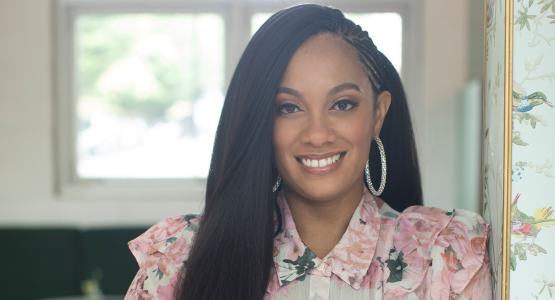
B.E. Boykin
Do you remember the first time you heard Florence Price’s music? How did hearing her music make you feel? What drew you to Price’s story?
I heard a lot of her art songs, a lot of Black women art songs. That’s how I started hearing more about Black women composers was through art songs. It was Florence Price, Margaret Bonds, Undine Smith Moore, and Betty Jackson King. I was immersed in a lot of their art songs and I was like, “I love their writing!” So that was how I started getting my first listen to Florence. And then I started listening to more of her symphonic works. And I was like, “Oh my God! She is that woman!” I had never heard anything like it. I remember there was one piece for choir and organ, but it was giving you Bach prelude and then also jazz in certain moments. I was like, “Ma’am, you are writing.” I love the way that she was able to still be herself in her writing and incorporate a lot of Black music into the classical medium. I was inspired and then I read more about her story. I don’t know if I ever thought about making her into an opera. I think that conversation came later on down the road.
Could you tell us a bit about the making of this opera? What audiences did you have in mind or hope to center throughout this show?
I think Florence set the example that music is universal. She understood that, yes, she had her community, whether it was Black churches or Black classical supporters or even the brilliant writers of the time who were her friends. They were in community with each other. You have all of these brilliant artists who were in community with each other, but I think she understood that music was still universal and wanted to include people outside of that. I think sometimes classical music and choral music have a way of isolating certain demographics and I wanted to remind people that music is universal. Florence reminded me that I could bring myself to music and I could bring myself to opera. That’s what you hear. I think because it has jazz influence or there’s some moments where it’s gospel, or moments where it’s R&B, it’s accessible. It’s making opera accessible to those people that maybe don’t listen to classical music or don’t listen to opera regularly and it invites other people in.
Florence Price was heavily influenced and often “sampled” or referenced spirituals in her work or even utilized the form of spirituals to frame her symphonies. Has her compositional style influenced the score of My Name is Florence?
I think it just added further encouragement because, as a composer, I’ve always fused different styles and genres in my own writing because of my upbringing. I grew up on gospel, jazz, and R&B. I was a huge Aaliyah fan. I’ve never written in a strictly classical or modern way. I’ve fused things that I’ve heard throughout my entire life. In listening to her music or Margaret Bonds, it was just encouraging to hear that you can still be a Black composer, even in your music. I think it was more encouragement for me.
Why do you think naming is so important? Why does My Name is Florence focus on the three generations of Florences? What power does naming carry in My Name Is Florence?
In reading more about Florence’s story, it spoke to legacy. It was interesting to me because I have seen other Black women composers name their children after themselves. And I thought, “There’s something there. There’s something there.” Because men do it all the time, but it was interesting to see Black women composers doing it. There’s something special about Black women seeing something of value in passing down their name. I wanted to explore that because we’re all different. We’re all different people, even though you may carry the name of your dad or carry the name of your mom. You’re going to be a different person. I wanted to figure out, what is the meaning of it? What is the value of it? And what weight does it have? What value does it have? We wanted to explore that because I thought that it was interesting that there were three generations of Florences.
Many Black composers, especially Black women, and their work, are often framed as “lost” or “hidden” or “recently discovered”. This sort of language works to tell the narrative that no one is at fault and that the “losing” of their music is an accident. Could you tell us more about how such prolific composers like Florence Price end up “lost” and how do you challenge this myth of discovery in your opera?
The Black classical community did not lose her. She has been prominent in HBCUs [Historically Black Colleges and Universities] and in Black churches since the 1920s and 1930s. We did notlose her. She’s been here. In reading her story you realize how badly she wanted to be here. How badly she wanted her music and her name remembered. She wanted to be here. This idea of discovery or that, “We lost her.” No, we did not! No, we did not. She was fighting hard to be where she was in her present day and it didn’t happen that way, unfortunately. But we did not lose her. She’s been here.
In the post-2020 era, many opera houses throughout the country began to perform and commission new works by more diverse composers. However, in the last year we have seen several companies back away from these commitments. Could you tell us more about your experience in the MN Opera New Works Initiative? Does this model of new work development differ from other commissioning experiences? Do you believe this initiative challenges or possibly even repairs previous systems that worked to dismiss, erase, or “lose” composers like Florence Price?
I’m still relatively new and young in my career, so I don’t have a lot of points of reference as far as other organizations and how they structure their commissioning process, but I will say, I’ve enjoyed working with Minnesota Opera. I love that they’ve been able to allow artists to dream big, create and not put parameters on what stories we tell. I’ve really appreciated that. I don’t know if that’s a standard model, but I’ve really appreciated that. It’s been extremely supportive and it’s exciting! I know new work is always a little daunting for some organizations, but you know, I think it says something about the organization that’s willing to create that space for modern day artists. Like, “OK, you know, we want to allow you this opportunity to create new work alongside all of the other masterworks that people perform yearly, so we can start to mix things up.” I think that’s exciting! It’s commendable for those organizations who are able to do it.
As you’ve mentioned, Price is part of a larger cohort of Black artists in the 1920’s and 1930’s. Could you tell us who are the members of your community who have helped develop your practice as an artist?
I don’t want to name names because there’s just been so many. In that same regard as Florence, who found support within the Black community, I have as well. There are so many composers and writers that I love working with and that I love for who they are because they’ve embraced me. I do have my community, and I’ve been inspired by so many. I’m grateful, grateful to have that community.
One of my favorite parts of this opera is that it encapsulates a lot of joy and love for music, family, and community. What is Black joy to you and how do you think it is best expressed in this opera?
I think Black Joy, especially in thinking about the story of Florence, is feeling like you don’t need the stamp of approval from the outside world. Even though she struggled and she couldn’t get her music heard, I wonder what other things brought her joy? And I think it washer family, her daughter, her Florence. I think it was her music, her writing, and leaving us all these beautiful compositions after she passed on. I think she was able to still find joy. I think that’s what she left us.
Why now? What do you think a performance like this means for audiences of today in 2026 and to Twin Cities audiences?
I think it’s another vessel of storytelling. Race is tricky. It’s a difficult conversation and it’s never easy to have that conversation. But at the end of the day, this is someone who lived and who existed and created and this is her story. I think people forget that we as a community have a lot of things to work on. I think that this story, her story, is another reminder that if you were just open and can be embracing of someone else’s differences, no matter what they are, that you may find something really beautiful inside. People put all these barriers around her, during that time, because of what our country was going through. She was Black. She was a woman. Yes, she was degreed. Yes, she had the experience, but it didn’t matter to them. And how unfortunate because they missed out! They missed out on experiencing a beautiful composer during her time.
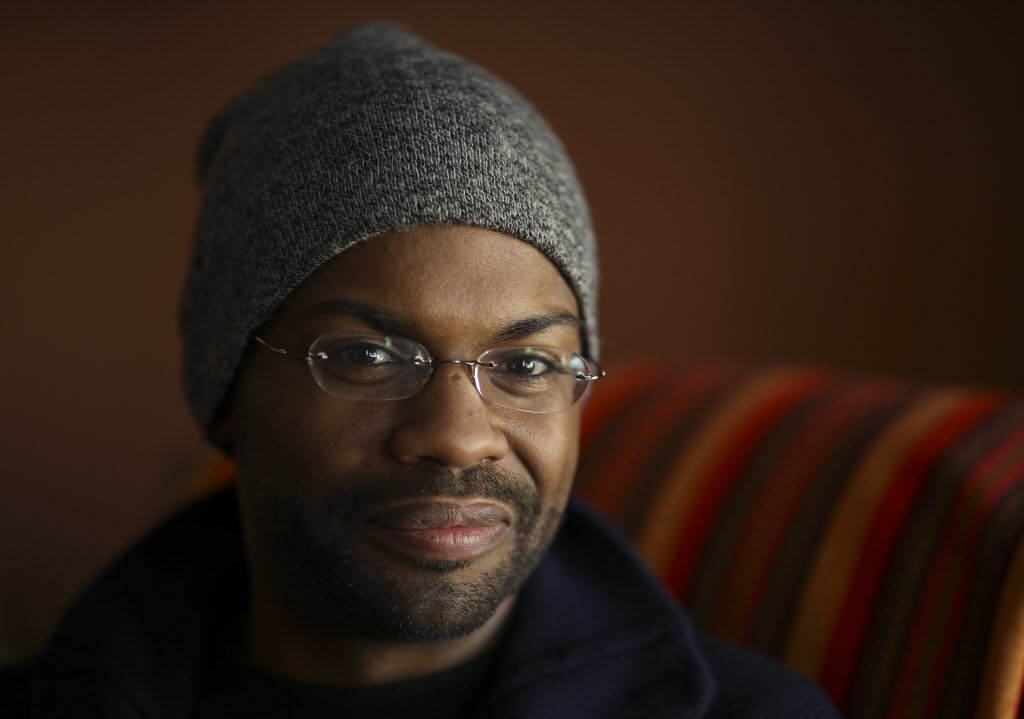
Harrison David Rivers
How did you get involved with this project?
I’m a member of Minnesota Opera’s New Works Initiative, a cohort of six – three composers and three librettists – who, over the course of seven-years, will create a total of nine new operatic works – three song cycles, three chamber operas and three grand operas. My Name is Florence is my first New Works Initiative project, a chamber opera with composer B.E. Boykin.
Do you remember the first time you heard Florence Price’s music? How did hearing her music make you feel? What drew you to Price’s story?
It’s possible that I became aware of Florence Price at the same moment that so many of us did, when a number of her musical manuscripts, books, personal papers and other documents were discovered in an abandoned house (it was once Price’s summer home) on the outskirts of St. Anne, Illinois in 2009.
G. Schirmer purchased the rights to her catalog in 2018, which prompted a number of major orchestras to program her work.
As far as what drew us to Price, B.E. and I were interested in writing something with a sense of history, something human, humane and hopeful, a story of resilience, dignity and joy. Florence’s story checked all of those boxes.
Could you tell us a bit about the making of this opera? What audiences did you have in mind or hope to center throughout this show?
B.E. and I never expressly discussed this, but I think that a primary goal of ours was to make something accessible, both in terms of the narrative and the music. In my opinion, My Name is Florence is a perfect first opera (for a visitor of any age) – it’s funny and lived in, with a real warmth and a toe-tapping score – but it’s also sophisticated enough for the season ticket holder.
My family aren’t opera-goers, not because they don’t appreciate classical music – I grew up playing the violin in a youth orchestra and they were at every concert – but because it wasn’t something that was available to us, for one, and, for two, because opera’s learning curve appeared to be quite steep. From the outside, opera seemed more “arms folded across the chest” than “arms open wide in welcome.”
My Name is Florence has wide open arms.
Why do you think naming is so important? What power does naming carry in My Name is Florence?
I am regularly complimented on my name. By waiters in restaurants. Cashiers at grocery stores. By people who I’m meeting for the first time. I always give my parents credit.
When I was a kid, people would tell me that my name sounded like it should be in lights. “It’s an actors name,” they would say, “or a President’s.”
I am neither of those things, but I have always felt like they were possible – truly, that anything was possible – in part, because of the seemingly infinite possibility inherent in my name.
And while I agree with Shakespeare that it is the true essence of a person, and not their name, that matters, I also believe that names carry significant identity and cultural meaning. Especially given the historical trauma of slavery where names were stripped away from Black people, the creation of new names to reclaim lineage, express pride, and signify aspirations, is undeniably powerful.
Florence Price’s mother gave her daughter her name, Florence, and she, in turn, gave her name to her daughter. Three generations of Florences. Three generations of accumulated struggle and hardship, but also of beauty and perseverance and triumph.
What’s in a name? Incredible power.
In the post-2020 era, many opera houses throughout the country began to perform and commission new works by more diverse composers. However, in the last year we have seen several companies back away from these commitments. Could you tell us more about your experience in the MN Opera New Works Initiative? Does this model of new work development differ from other commissioning experiences? Do you believe this initiative challenges or possibly even repairs previous systems that worked to dismiss, erase, or “lose” composers like Florence Price?
What is most unique about the New Works Initiative is its commitment to artists over time. Most commission opportunities are singular. You’re approached by an organization, you create a work, you turn it in, and it is or isn’t produced. Done. What Minnesota Opera offers, which is a rarity amongst arts organizations, is a long-term relationship. An artistic home; a place we can return to again and again.
One of my favorite parts of this opera is that it encapsulates a lot of joy and love for music, family, and community. What is Black joy to you and how do you think it is best expressed in this opera?
To me, an opera with four Black principals, a Black composer, a Black librettist, a Black costume designer, a Black lighting designer, and a Black director, is joyful.
To me, the idea that Black audience members will see themselves represented on stage in an artform that continues to grapple with racial diversity, is joyful.
To me, the presence of culturally Black music – jazz, gospel, R&B, hip-hop – in the opera, is joyful.
To me, an opera that celebrates Black life in all its complexity, is joyful.
Why now? What do you think a performance like this means for audiences of today in 2026 and to Twin Cities audiences?
We all want to be seen and heard, and we want our work, our art, our lives, to be seen and heard. Life is so unpredictable. We can’t see the future. I hope My Name is Florence encourages people to appreciate “today” today; to appreciate talent and goodness and kindness and generosity today.